Leaving Polly’s farm and returning to life without a fixed home
The Salt PathLeaving Polly’s farm marks a sharp reversal in Ray and Moth’s housing journey: they give up the security of a roof and return to homelessness, not because the farm has expelled them but because staying would constrain their attempt to build a different future. The departure is both precarious and deliberate. They leave with only £200, no immediate home, and Moth’s health at a low point, yet Ray can already feel the freedom of moving towards a destination they have chosen.
A roof, but not a settled home
Ray and Moth had reached the farm after losing their home and rental business, and after finding few workable alternatives. Their savings had been consumed by legal costs in the dispute over Cooper’s claim; after becoming litigants in person, they faced a possession claim against the farm and the home they had built their life around. The subsequent housing options offered little relief. A campsite wanted £80 a week, with no housing benefit available for the fees, while holiday caravans were booked for peak-season visitors. Their damaged credit made private renting close to impossible, and the council could offer only a place on a waiting list or, at that moment, a bed-and-breakfast room in accommodation largely used by people with drug and alcohol problems. The council did not consider Moth ill enough to qualify as a priority because his condition was not expected to kill him within a year. Faced with these restrictions, Ray and Moth preferred the tent.
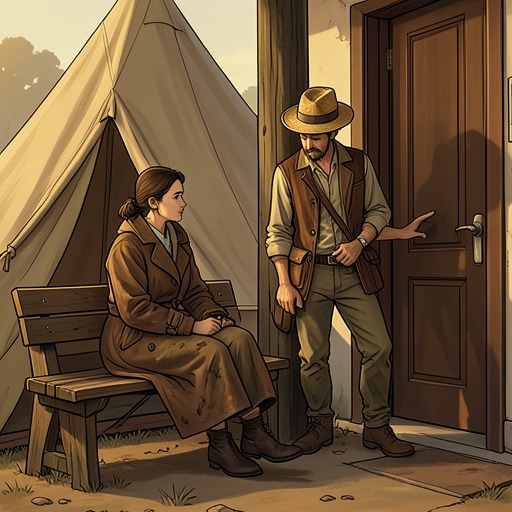
The farm offered a different kind of provisional shelter. In a disused meat-packing shed, they pitched their tent beneath a corrugated roof. The building still resembled a processing room: plastic wall covering peeled, moss grew on the windows, insulation hung from the rafters, and a wood burner had melted the plastic nearby. Polly did not ask for rent; in return, Moth was to help make the building usable, and both were to contribute to the farm. Their friendship, which had lasted from teenage crises into adult anxieties, made the arrangement feel mutual. But the shed was a refuge rather than a settled home, and the possibility that someone else might rent it hung over their stay.
The decision to leave
Moth applied to university, completed a Skype interview, and was accepted. Their credit history did not prevent them from obtaining student finance, which promised a reliable income: the two of them calculated that they could live on one student loan until Ray found work. The application offered a possible route towards a new life, but it also made their uncertain housing arrangement harder to sustain. They could not yet commit to leaving the shed, and giving up a roof voluntarily seemed unnatural after the instability they had endured.
At the same time, Moth’s pain was worsening, and Ray feared that his health was deteriorating too quickly for university to be realistic. They kept the application from Polly while they waited to see what would happen with the shed. Then, during a conversation in Polly’s kitchen, Polly explained that the farm urgently needed additional income. Ray understood the pressure and recognised that this was the moment to speak. If their plans were to move forward, she reasoned, they had to do so now. She told Polly about Moth’s university application and proposed leaving if the shed’s rent would help the farm.
This decision carries a double change in security. The student loan offered a prospective source of income, but it had not yet arrived; leaving would mean exchanging the immediate shelter of the farm for more than two months without anywhere to go. Ray and Moth nevertheless packed, taxed and insured their van, deposited enough money for a rental deposit and a month’s rent, and returned the keys. They could not yet rent a place because they had to wait for the loan, due in late September. With £200 left, they loaded the van and said goodbye to Polly.
Returning to homelessness by choice—and constraint
Their departure is not a simple embrace of freedom. Moth’s health was at its lowest point so far, the student finance remained in the future, and they had no accommodation arranged. The decision was made under pressure from the farm’s finances and their own need to make a forward move. Yet Ray distinguishes this return from the first moment of homelessness. In early August, standing in Taunton with their rucksacks at their feet, she had felt that there was no door to return to and that the patch of road beneath them was the safest place she had. This time, homelessness was still ahead, but the couple knew where they were going.
The contrast also clarifies the limits of their earlier mobility. Travel in a van had once been different from homelessness because a return door remained available, even if that door led to a life they were escaping. After the loss of their home, they had been forced to measure every option against money, credit, illness, and access to accommodation. Now leaving the farm restores some agency, but it does not remove those constraints. They set off with a plan rather than a home.
Walking as a chosen direction
The South West Coast Path becomes the direction they choose for this next unsettled period. Earlier, Ray and Moth had been taken by bus from Barnstaple to Westward Ho!, and the break in the trail left them feeling disconnected and slightly lost. Later, after more than 250 miles of pain, exhaustion, hunger, wild nights, and bad weather, they could have returned to Wales, joined the council housing list, and sought a cheap winter campsite. Instead, they watched the bus leave and chose to keep walking. In the rain, with water running from their rucksacks, they described the path as a place where they retained control over whether to continue, stop, or move on.
That sense of choice remains fragile. As they approach Plymouth, the path’s familiar routine—packing the tent and walking on—offers certainty, while the life beyond it brings fear about money, meeting new people, and Moth’s future when walking must stop. Later, when a plan in Plymouth falls apart, Ray feels panic at the prospect of sleeping in a town, something they had hoped to avoid. These episodes show that the departure from Polly’s farm does not resolve their housing insecurity; it renews the journey through it.
An opening on the route
The return to homelessness does not end with the departure itself. On the road, Ray and Moth continue to look for somewhere they can live, while their progress along the coast keeps a possible future in view. At the end of the trail, Anna offers them the chance to rent her flat in Polruan after learning about their circumstances. The coastal path runs past its front door, joining shelter to the route that has carried them through homelessness. The offer is an opening rather than proof that the larger difficulties have disappeared, but it gives the journey a possible next step: not simply finding somewhere to stop, but finding a home from which walking can continue to be a choice.